
10 Natural Ways to Boost Testosterone and Optimize Hormone Health
If you're a man in your 30s, 40s, or 50s living in Arizona and you're struggling with fatigue that no amount of coffee can fix, your libido has tanked, and you can't seem to hold onto muscle no matter how hard you hit the gym, I want you to know something: this is real. What you're experiencing is likely andropause, which is basically low testosterone. And it's becoming increasingly common in men your age.
The symptoms hit different. You get that afternoon energy crash around 2 PM that makes work feel impossible. You've lost the drive and motivation you used to have. The muscle you worked so hard to build? It's slipping away. Your relationship feels the strain too because your interest in intimacy has just... evaporated.
Here's what's happening: testosterone is the hormone that runs your show. It controls your muscle mass, your energy levels, your mood, your libido, and how your body burns fat. For most men, testosterone starts declining around age 30, dropping about 1% per year. Add stress, bad sleep, a desk job, and poor eating habits on top of that, and you're looking at low testosterone levels that are tanking your quality of life.
The good news? You have options. You don't have to just accept this as part of aging. Whether you're interested in natural testosterone optimization through lifestyle changes or whether you're ready to explore testosterone therapy like TRT, there are real solutions that work.
This guide walks you through 10 concrete strategies to boost testosterone naturally. Some of these changes can shift your testosterone levels significantly on their own. Others work even better alongside testosterone therapy if that ends up being the right path for you.
Let's get into it.
1. Lift Heavy: The Power of Resistance Training
Here's something that actually works to raise testosterone: heavy strength training. And we're talking real lifting, not just going through the motions on machines. Compound movements like squats, deadlifts, bench presses, and barbell rows trigger a measurable testosterone response in your body.
The reason this works is straightforward. When you lift heavy, you create micro-tears in your muscle fibers. Your body responds by releasing testosterone, growth hormone, and other anabolic hormones to repair and rebuild that muscle. The heavier you lift and the more progressive overload you create (meaning you keep pushing weight up over time), the bigger the testosterone spike.
The key is consistency and progressive overload. You can't just do the same weight every week and expect testosterone to keep rising. You need to actually challenge yourself. Aim for 3 to 4 strength sessions per week, focusing on those compound movements that engage your whole body. And here's the thing most guys miss: testosterone production happens during recovery, not during the workout itself. So rest days matter just as much as workout days. If you're barely recovering between sessions, you're leaving gains on the table.

2. Prioritize Sleep: Your Hormone Factory
You know that feeling when you haven't slept well and you're running on empty? That's not just about feeling tired. Your testosterone takes a hit too. Sleep is where your body manufactures testosterone. During deep sleep and REM sleep, that's when your testosterone production peaks.
The connection is direct. Studies show that men sleeping only 5 hours a night have testosterone levels comparable to men 10 years older. And it gets worse with chronic sleep deprivation. When you're not sleeping enough, your cortisol (the stress hormone) stays elevated, and elevated cortisol actually suppresses testosterone. You end up in this downward spiral where poor sleep leads to low testosterone, which leads to fatigue and poor mood, which leads to more sleep problems.
So here's what actually moves the needle: aim for 7 to 9 hours of solid sleep every night. I know that sounds like a lot, but this is where testosterone gets made. Make your bedroom work for sleep. Keep it cool, around 65 to 68 degrees. Get rid of blue light from screens about an hour before bed. And stick to a consistent sleep schedule, even on weekends. Your testosterone (and your whole body) works better when it knows what to expect.
3. Master Stress Management: Break the Cortisol Cycle
Chronic stress is one of the biggest testosterone killers, and most guys don't even realize it's happening. When you're stressed out, your body doesn't care about building muscle or maintaining libido. It's in survival mode, pumping out cortisol to handle the threat. Over time, elevated cortisol suppresses the system that produces testosterone.
Think about it this way. When you're stressed, your body essentially says "we need to deal with this immediate problem, so testosterone production can wait." And if you're chronically stressed (which, let's be honest, most of us are), your testosterone never recovers. Your adrenal glands get exhausted trying to manage all that stress, and your testosterone keeps dropping.
The solution is actually pretty simple, but most men skip it. You need to actually spend time reducing stress. That means meditation, deep breathing, yoga, or even just spending time in nature. You don't need to do this for hours. Even 10 to 15 minutes a day of actual stress management can shift your nervous system from fight or flight mode into rest and recovery mode. And when you're in rest and recovery mode, your body can finally make testosterone again.
4. Achieve a Healthy Body Composition
Here's something nobody wants to hear but it's true: if you're carrying excess body fat, especially around your midsection, you're essentially manufacturing estrogen and suppressing testosterone. Extra body fat produces an enzyme called aromatase, which converts testosterone into estrogen. More fat means more of your testosterone is getting converted away from you.
This creates a nasty cycle. Low testosterone leads to muscle loss and slower metabolism. Slower metabolism plus less muscle leads to easier fat gain. More fat means more aromatase, which means even lower testosterone. Before you know it, you're in a downward spiral that's hard to climb out of.
The way to break this cycle is straightforward but requires consistency. Combine strength training (which we covered above) with a diet that supports fat loss without destroying your metabolism. You're not doing some crash diet here. You want to lose fat while preserving muscle. That means adequate protein, plenty of whole foods, and a calorie deficit that's sustainable. Even losing 5 to 10 percent of your body weight can produce measurable improvements in testosterone levels. And once your testosterone starts rising, the muscle comes back easier and the fat comes off easier. It's like the cycle finally starts working in your favor.
5. Fuel Your Body: Nutrition for Optimal Testosterone
You can't build testosterone on a garbage diet. Your body needs specific nutrients to actually manufacture testosterone in the first place. Three nutrients matter most here.
Zinc is essential for testosterone production. If you're deficient in zinc, you're not going to produce normal testosterone levels, period. You get zinc from oysters (they're loaded with it), beef, pumpkin seeds, and legumes.
Vitamin D acts like a hormone in your body and directly regulates testosterone production. Most men are deficient in vitamin D, especially in Arizona during winter months. You get it from fatty fish like salmon and mackerel, egg yolks, and mushrooms that have been exposed to sunlight. Or you can just get outside in the sun.
Healthy fats support hormone production and the signaling systems your body uses to make testosterone. This means omega-3s (fatty fish, flaxseeds), monounsaturated fats (olive oil, avocados), and quality saturated fats (grass-fed beef, coconut oil).
How you structure your meals matters. Build every meal around a protein source, colorful vegetables, and a healthy fat. Skip the ultra-processed stuff and refined carbs. Those cause insulin spikes that mess with your hormonal balance. When your insulin is constantly elevated, your testosterone tends to be suppressed.
6. Optimize Vitamin D Status
Vitamin D deficiency has basically become the norm, and it's hurting your testosterone. Research shows that men with adequate vitamin D have testosterone levels about 25 percent higher than deficient men. That's a massive difference from literally just optimizing one nutrient.
The reason is that vitamin D isn't actually a vitamin, it's a hormone. Your body has vitamin D receptors all over the place, including in your testes and in tissues involved in testosterone production. Low vitamin D means your body can't efficiently produce testosterone even if everything else is in place.
So what do you actually do about it? Get some sun. Aim for 20 to 30 minutes of midday sun exposure a few times per week. That's it. If you're in Arizona, you have no excuse here, you have sun year round. But if you're working inside all day, consider supplementing.
7. Include Zinc-Rich Foods in Every Meal
Zinc is critical for testosterone production. Men with low zinc have measurably lower testosterone. And here's the thing: if you correct a zinc deficiency, testosterone often comes right back up. It's one of the most direct nutrient-to-hormone relationships out there.
Zinc is involved in the enzyme that does the final step of testosterone production. Without enough zinc, that last conversion doesn't happen efficiently. You also need zinc for sperm health and fertility, so if low libido and sexual performance are part of your low testosterone problem, zinc is doubly important.
The simple solution is to eat zinc-rich foods at every meal. Oysters are the highest source. Red meat and poultry have plenty of zinc. If you eat shellfish, grab them whenever you can. Legumes like beans and lentils have good amounts. Seeds like pumpkin, hemp, and sunflower seeds are easy to add to meals. Almonds and cashews work too.
If you're vegetarian or vegan, you're going to need to be more intentional here. Load up on legumes and seeds, and talk to someone like our team at Modern Health & Wellness about whether supplementation makes sense for you.
8. Reduce Alcohol Consumption
If you're trying to boost testosterone, alcohol is working against you. Even moderate drinking suppresses testosterone, and the effect is pretty immediate. Have a few drinks and your testosterone takes a hit that same day.
Here's what's happening. Alcohol interferes with the part of your brain that controls testosterone production. The hypothalamus and pituitary gland basically run the whole show, and alcohol messes with their signaling. Alcohol also increases aromatase activity, which means more of your testosterone is being converted into estrogen. If you're drinking regularly, you're chronically converting away your testosterone.
And with chronic drinking, the damage gets worse. Your testes themselves actually get damaged by chronic alcohol use. You're not just temporarily suppressing testosterone, you're potentially damaging your ability to produce it.
So here's what works: limit yourself to 1 to 2 drinks per week, maximum. If testosterone is a real priority for you, consider cutting out alcohol entirely for 30 days. See what happens to your energy, your libido, your body composition. Most guys are shocked at the difference when they cut alcohol out. You might decide it's worth it.
9. Stay Hydrated and Minimize Sugar
Dehydration messes with every system in your body, including hormone production. You're not producing testosterone efficiently if you're constantly dehydrated. Meanwhile, excess sugar is actively suppressing your testosterone.
Here's the mechanism: when you consume a lot of sugar, your insulin spikes. Chronically elevated insulin suppresses testosterone and accelerates the conversion of testosterone into estrogen. You're essentially working against yourself.
The fix is simple. Drink about half your body weight in ounces of water per day. If you weigh 200 pounds, that's 100 ounces. Adjust that number up if you're exercising or in the Arizona heat. Get rid of sugary drinks entirely. Replace them with water, herbal tea, or black coffee. And swap out refined carbs for whole foods like oats, sweet potatoes, quinoa, and legumes that give you steady energy without the insulin spike.
This is one of those changes where you'll feel it almost immediately. Better hydration, fewer blood sugar crashes, and more stable energy throughout the day. Your testosterone will follow.
10. Move Consistently: The Underrated Power of Regular Activity
We talked about heavy lifting for testosterone, but overall movement matters too. A sedentary lifestyle actively suppresses testosterone. On the flip side, consistent movement supports healthy testosterone levels.
The key is balance here. You want heavy strength training to trigger testosterone production. You want moderate cardio a few times a week (20 to 30 minutes of running, cycling, rowing, whatever you'll actually do). And you want low-intensity movement like walking, stretching, and mobility work on your recovery days.
The trap most guys fall into is overdoing the cardio without adequate recovery. Excessive endurance exercise without proper rest can actually elevate cortisol and suppress testosterone. You're working against yourself. Think of movement as medicine. Heavy lifting is the strong dose. Moderate cardio supports health. Easy walking is maintenance. You need all three.
Schedule your workouts like they're business meetings. Don't skip them. Mix your intensities so you're not hammering yourself every single day. Heavy lift days, moderate cardio days, and easy movement days. That's how you build and maintain testosterone.
The Synergy Factor: Why These Work Better Together
Here's the thing: these 10 strategies don't work great in isolation. They work best together. Better sleep improves recovery from training and stabilizes your mood. Stress management protects your testosterone from getting tanked by cortisol and restores your libido. Proper nutrition fuels your workouts and the actual production of testosterone. When you address multiple areas at the same time, you create an environment where testosterone thrives and andropause symptoms fade.
Most men notice measurable improvements in energy, focus, and gym performance within 4 to 6 weeks. Libido often improves within 2 to 3 weeks as testosterone starts to rise. The bigger hormonal shifts and muscle gains typically show up within 8 to 12 weeks.
For many men with moderate andropause symptoms, these lifestyle interventions alone produce dramatic results. For others, they work great alongside testosterone therapy. Either way, you're creating the conditions where your body can produce testosterone or respond to testosterone therapy.
The Next Step: Know Your Numbers
These lifestyle strategies are powerful. They work. But here's the honest truth: if you've had low testosterone for years, lifestyle changes alone might not get you all the way there. You need to know your actual numbers.
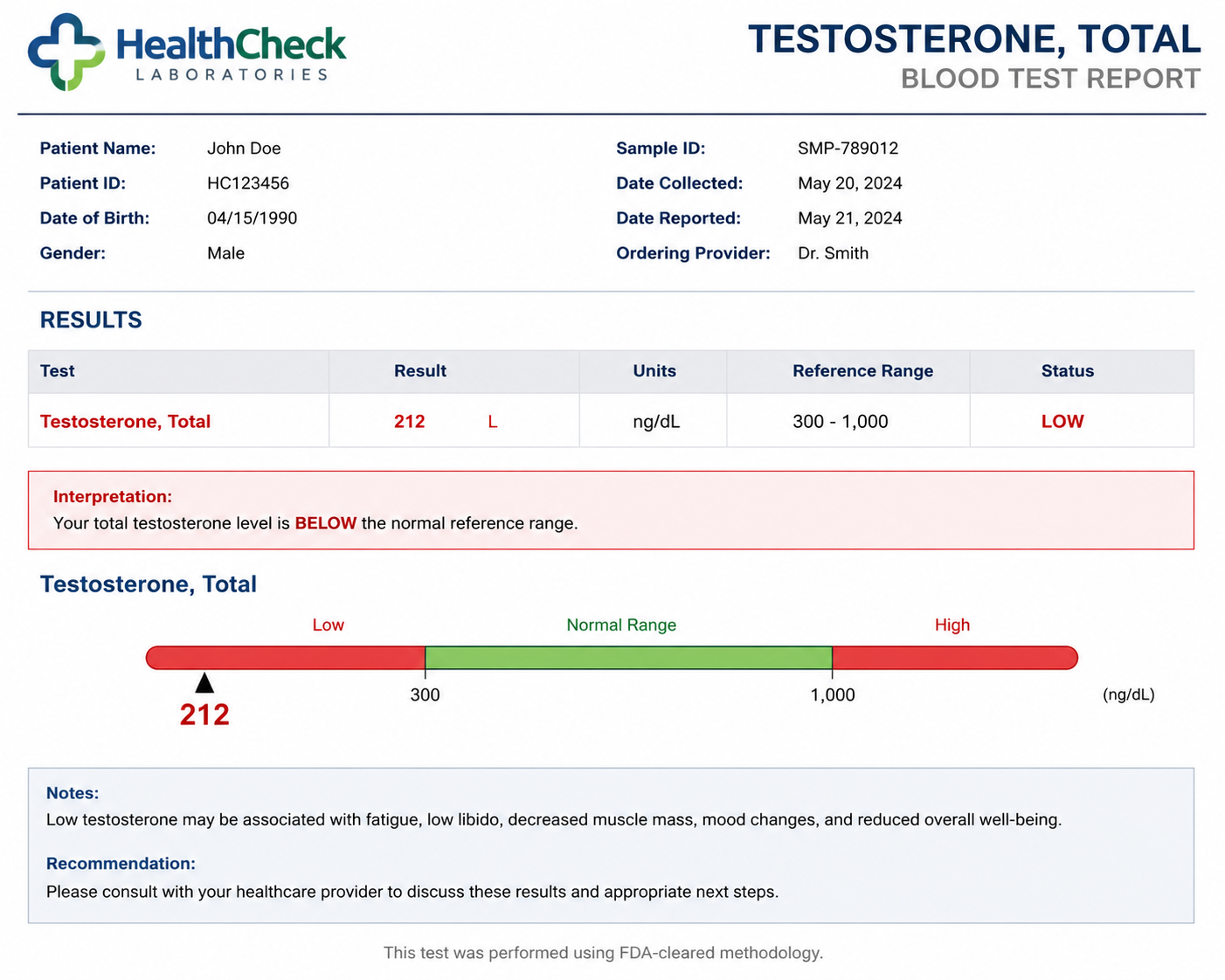
A testosterone test tells you exactly where you stand. Are you in the normal range but feeling terrible because you're on the low end? That happens a lot. Are you genuinely deficient? Is it your total testosterone that's low or your free testosterone? Those are different problems with different solutions.
You also need to check estradiol. If your testosterone is being heavily converted to estrogen, that's a separate issue that needs addressing. And you want to understand your SHBG (sex hormone-binding globulin), LH, and FSH because those tell the story of how your body is producing testosterone.
Here's what a comprehensive hormone panel should include: total testosterone, free testosterone, SHBG, estradiol, LH and FSH, thyroid markers (TSH, Free T3, Free T4), and basic metabolic markers.
Why does this matter? Because some men do fantastic with lifestyle changes alone. They optimize sleep, they start lifting heavy, they clean up their diet, and boom, their testosterone comes back to healthy levels. Other men do all of that and their testosterone still stays low because there's a physiological issue that needs clinical support.
That's where testosterone therapy comes in. If your testosterone is genuinely low and lifestyle interventions aren't enough, TRT (testosterone replacement therapy) is an option. TRT isn't something to fear. It's medicine. It's designed to bring your testosterone back to a healthy physiological range so you feel like yourself again.
Some men do TRT alone. Others combine TRT with the lifestyle strategies we've outlined. Either way, the goal is the same: get your testosterone to a level where you have energy, where you want to be intimate with your partner, where you can build muscle and feel like yourself.
Schedule Your Hormone Assessment Today
If you're experiencing fatigue, low libido, and muscle loss, the first step is getting your testosterone levels tested. You need to know your numbers. From there, you can make informed decisions about whether lifestyle changes alone will work for you or whether testosterone therapy is something worth exploring.
The team at Modern Health & Wellness specializes in men's hormone health. We offer comprehensive testosterone testing, personalized protocols, and ongoing support. Whether you need help optimizing lifestyle factors, whether you're a candidate for TRT, or whether you want to combine both approaches, we can help you create a plan that gets your life back.
Book your consultation today and let's get your testosterone back to optimal levels.
Contact Modern Health & Wellness:
Phone: (602) 878-9478
Email:hello@modernhealthaz.com
Location: Gilbert/Scottsdale, Arizona
